
Staring at a completely bare yard can trigger a mix of intense excitement and absolute paralysis. Whether you are dealing with a patch of raw dirt around a newly constructed house or inheriting a neglected jungle that needs to be cleared to the roots, a blank canvas is both a massive opportunity and a significant responsibility. The temptation to run to the nearest nursery and buy a truckload of blooming perennials is strong, but jumping into planting without a master plan is a recipe for wasted money, dead flora, and backbreaking labor that must be undone later.
Designing a landscape from scratch is not just about choosing pretty flowers or laying down green sod. It is an exercise in architecture, engineering, ecology, and asset management. Upfront planning saves you thousands of dollars in foundational mistakes, prevents catastrophic plant loss, and ensures that your outdoor environment feels like a cohesive, natural extension of your indoor living space.
This comprehensive guide will walk you through the entire journey of building an outdoor oasis from the soil up. We will explore how to analyze your site’s natural conditions, navigate the legal and financial frameworks governing your land, map out permanent structures, design your living botanical layouts, and ultimately hire the right team to bring your vision to life. By taking a systematic approach, you will transform your open space into a functional, beautiful retreat that grows in value and beauty every year.
Phase 1: Analyzing Your Blank Canvas and Property Foundations
Before you sketch a single patio line or select a color palette, you must get intimately acquainted with the physical reality of your dirt. Every parcel of land possesses unique natural forces that will dictate what can thrive and what will fail. Ignoring these environmental factors guarantees that nature will eventually win, usually at the expense of your budget.
Charting Sun Patterns and Microclimates
Plants rely on sunlight for survival, but the way light moves across your yard is rarely uniform. Spend a few days tracking the sun’s trajectory across your property.
- Note which zones receive uninterrupted morning sun but are baked by harsh, scorching afternoon heat. These western-exposure areas require tough, drought-tolerant varieties.
- Identify the deep shade cast by your house, existing mature trees, or neighboring structures. These cool spots are ideal for mosses, ferns, and hostas.
- Remember that sun angles change dramatically between winter and summer; a spot that is bathed in light during July might be completely cast in shadow by December.
Evaluating Soil and Drainage Patterns
Water is the lifeblood of your landscape, but improperly managed water is an absolute destructive force. Observe your yard during a heavy rainstorm to see exactly where the water travels and where it pools.
- Look for low spots where water stagnates for more than twenty-four hours, as these areas will rot the roots of most standard plants unless engineered into a rain garden or fitted with a French drain.
- Test your soil texture to determine if you are working with heavy, compacted clay that traps water or loose sand that allows moisture and nutrients to drain away instantly.
- Dig a few test holes around the property to check for shallow bedrock or hidden construction debris left behind by builders.
Assessing Site Context and Value Boundaries
Understanding your land means looking beyond your immediate perimeter. The surrounding environment dictates your privacy, your views, and how your plot relates to the broader community. If you recently went through a vacant land appraisal process, look over those assessment documents. They often contain critical notes regarding topography, soil quality, and unique geographic features that can influence how you layout your yard.
Furthermore, your initial landscaping decisions should align with the broader goals that initially prompted your property search. If you selected a specific lot for its panoramic views, your landscape design must protect those sightlines rather than blocking them with oversized trees. Understanding the inherent strengths and limitations of your ground from day one ensures that every dollar spent on earthmoving and grading directly enhances the intrinsic value of the location.
Phase 2: Aligning with Legal, Financial, and Community Guidelines
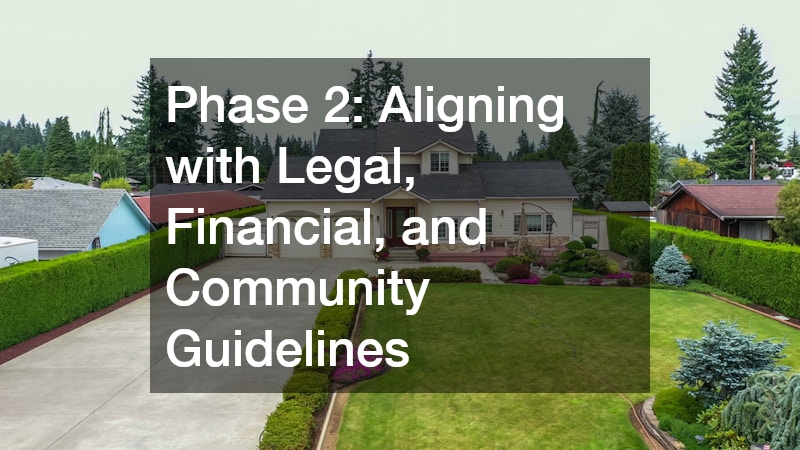
Landscaping feels like a creative endeavor, but it is bound by a strict web of legalities, property rights, and financial realities. Failing to check the regulatory box before ordering materials can lead to hefty fines, forced demolition of new structures, or compromised property values.
Deciphering Zoning Laws and Neighborhood Covenants
Before finalizing any design concepts, you must discover what is legally permissible on your plot. Municipalities and Homeowners Associations (HOAs) maintain strict control over aesthetics and safety.
- Check your local municipal code for structural setback requirements, which dictate how close a patio, retaining wall, or outdoor kitchen can get to your actual property line.
- Review your HOA rulebook, if applicable, to understand their approved plant lists, mandatory tree counts, and restrictions on front-yard design themes.
- Determine if your property intersects with environmental protection zones, such as wetlands or protected native woodlands, which strictly limit clearing and building activities.
Integrating Landscape with Real Estate Strategy
Your outdoor spaces should never be designed in a vacuum; they must protect and elevate your largest financial investment. If your long-term goal is to buy a home that you can enjoy for a decade and then sell for a substantial profit, your landscape should reflect universal appeal rather than hyper-specific eccentricities. Good landscaping can boost a home’s overall value significantly, while a poorly executed or high-maintenance yard can actually deter future buyers.
When inspecting land for sale with the intent to build and landscape, always factor the cost of site preparation into your overall financial equations. True landscaping from scratch often requires extensive grading, retaining wall construction, and topsoil importing. By treating your yard as a primary asset in your real estate portfolio, you ensure that your investments in irrigation, turf, and hardscaping yield tangible financial dividends down the road.
Phase 3: Drafting the Structural Blueprint and Legal Safeguards
With your environmental analysis and legal boundaries understood, you can shift to the structural bones of your yard. Hardscaping—the non-living elements like patios, walkways, driveways, and retaining walls—must always be planned and installed before a single plant goes into the ground.
Designing the Flow of Human Movement
Think of your yard as a house without a roof. You need hallways, entryways, and distinct rooms.
- Map out your primary walkways first, ensuring they are wide enough (at least three to four feet) for two people to walk side-by-side comfortably.
- Position your main gathering spaces, like dining patios or fire pit zones, where they can be easily accessed from the house’s back doors.
- Designate hidden utilitarian zones for garbage cans, composting systems, tool sheds, and HVAC units, keeping them screened from view but accessible via solid pathways.
Securing Your Exterior Capital and Estate Value
Permanent exterior structures represent a major capital investment. Because high-end hardscaping, outdoor structures, and mature specimen trees add real long-term wealth to your estate, they should be well-documented. When you work with an estate planning law firm to organize your family assets, these permanent property enhancements should be accounted for, as they directly alter the valuation and long-term maintenance liabilities of the property your heirs will inherit.
To prevent future legal headaches regarding where these high-value installations sit, it is wise to have your property boundaries formally surveyed. If you encounter any historical boundary discrepancies or ambiguous title deeds during your planning phase, consulting a real estate lawyer is an essential preventative step. Having a legal professional clarify ownership lines or draft formal easement agreements with neighbors ensures that your expensive new stone patio or custom outdoor kitchen never accidentally encroaches on land that isn’t yours.
Phase 4: Envisioning the Living Art and Perimeter Design
Once your hardscape framework is established, you can finally turn your attention to the living canvas. This is where your personal style shines, using textures, colors, and spatial layers to create a dynamic, living ecosystem.
Principles of Visual Layering and Space Design
Successful botanical arrangements depend on creating a sense of depth, rhythm, and scale. Instead of placing random plants in a straight line, think in three distinct horizontal dimensions.
- The Canopy Layer: Large shade trees and ornamental trees provide the ceiling for your outdoor rooms, offering vital shade and vertical scale.
- The Understory Layer: Medium-sized shrubs, decorative grasses, and structural perennials form the walls, defining separate zones and blocking unwanted views.
- The Ground Plane Layer: Low-growing perennials, groundcovers, and turf grass act as the carpet, binding the soil together and completing the visual picture.
When translating these layers to your physical yard, working out a comprehensive landscape design on paper allows you to experiment with shapes and themes—such as formal geometric lines versus flowing, organic curves—before committing to digging.
Defining Your Boundaries and Enclosures
Perimeter planning is essential for turning an exposed patch of earth into a private, secure sanctuary. You must determine how to balance visibility with protection.
- Assess your need for security, pet management, and wind reduction along your property edges.
- Consider how different boundary materials interact with your plants; a dark wood backdrop can make green foliage pop, while a open wire grid can support climbing vines.
When orchestrating a professional fence install along your boundary lines, ensure that the structure integrates seamlessly into your wider planting layout. Avoid running your garden beds flush against a new fence without leaving a small maintenance corridor, or plan ahead by placing softer, billowing shrubs in front of the barrier to break up any harsh, institutional lines.
Phase 5: Executing the Plan and Scaling for the Future
The gap between a beautiful paper design and a thriving, real-world landscape is bridged by smart execution, proper project phasing, and realistic budgeting. Trying to do everything simultaneously often leads to burnout and compromised quality.
Phasing the Construction Steps
If you are tackling a large yard from scratch, break the installation down into logical, multi-year phases to ease the strain on your wallet and your schedule.
- Year 1: Grading and Infrastructure. Complete all heavy excavation, install drainage systems, lay underground irrigation lines, and build your primary hardscapes.
- Year 2: Structural Planting. Install your large canopy trees and perimeter privacy hedges, as these take the longest time to mature.
- Year 3: Filling and Softscaping. Establish your lawns, build out the perennial flower beds, and add decorative elements like container gardens and lighting.
Sourcing Professional Help for Heavy Infrastructure
While DIY landscaping is rewarding for small projects, the heavy foundational phases of building a yard from scratch often require industrial-grade machinery and deep technical expertise. Hiring a certified landscape contractor to handle the initial clearing, soil remediation, and structural stone installations ensures that your yard’s grading is pitch-perfect and built to last. A professional crew brings the heavy excavators and grading tools needed to shape the earth properly, preventing shifting soils and sinking patios down the line.
Investing heavily in your landscape infrastructure is a wise decision, particularly in regions experiencing steady economic growth where property values are climbing sharply. As cities expand and neighborhoods modernize, properties boasting mature, professionally engineered, and sustainable landscapes stand out dramatically from the crowd. By focusing on native, climate-resilient plants and efficient irrigation systems during this final execution phase, you guarantee that your brand-new landscape remains cheap to maintain, highly resilient against extreme weather, and beautiful for decades to come.
Planning your landscaping from scratch is a transformative journey that turns raw, unmanaged ground into an enduring expression of your lifestyle and values. It requires patience, a willingness to study the natural rhythms of your site, and a commitment to setting up a solid legal, structural, and environmental foundation before planting your first seed.
By taking the time to analyze your microclimates, respect your property lines, phase your construction logically, and blend your hardscapes harmoniously with living layers, you avoid the expensive trial-and-error that plagues so many property owners. Remember that a great landscape is never truly finished; it is a living investment that evolves, matures, and grows richer with each passing season. Grab a notebook, observe your patch of land throughout the day, and start sketching out the framework for your future outdoor sanctuary.